

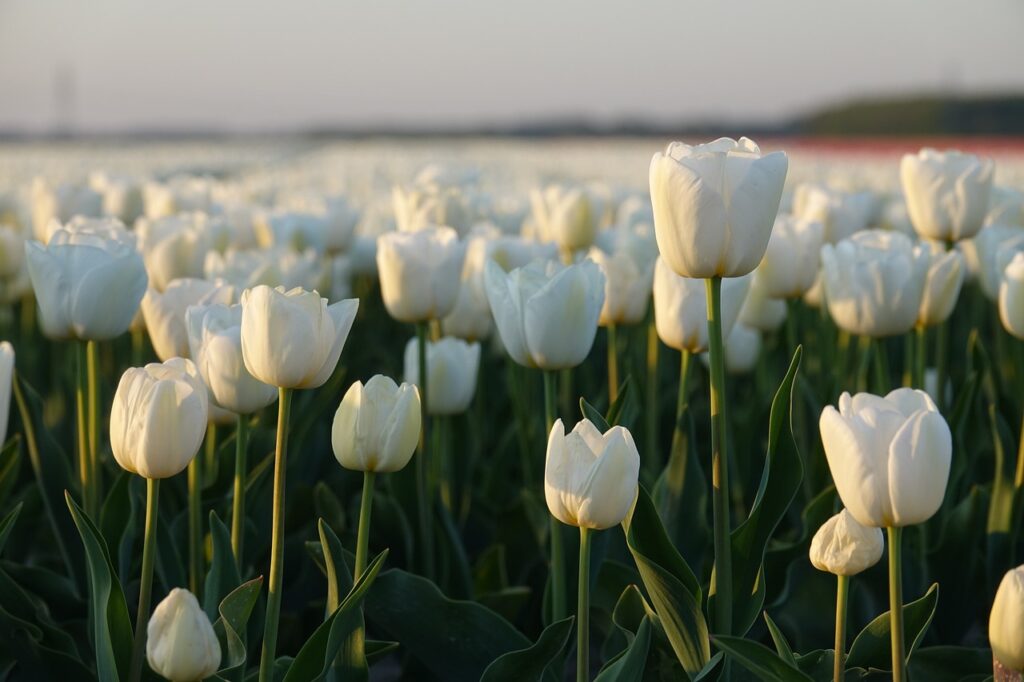
White tulips are admired for their elegance, simplicity, and timeless charm. Known for their pure white petals, these flowers are often associated with beauty, serenity, and grace. Whether displayed in gardens, arranged in bouquets, or used as decorative accents, white tulips have a universal appeal that suits any occasion.
Their versatility makes them a popular choice for weddings, anniversaries, and even sympathy gestures. With proper care, they can thrive in gardens, pots, and indoor settings, making them an excellent addition to any space.
From their symbolic meanings to practical care tips, white tulips continue to captivate gardeners and flower enthusiasts around the world.
Symbolism and Meaning of White Tulips
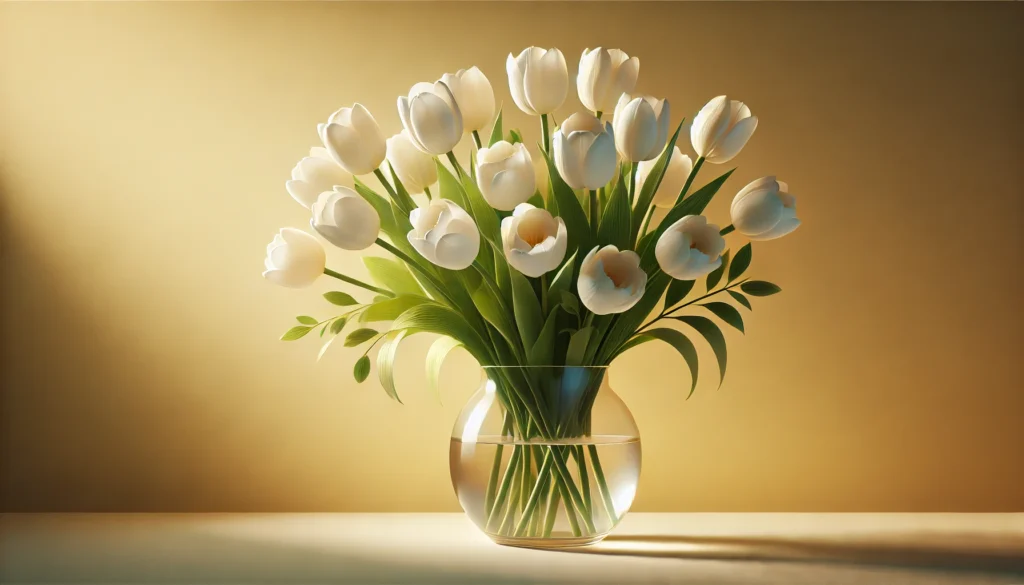
Table of Contents
White tulips have long been admired for their beauty and rich symbolism. Historically, tulips originated in Persia and Turkey, where they symbolized paradise on earth. Over time, they gained popularity across Europe, especially during the Dutch Golden Age, becoming a symbol of wealth and luxury.
In modern culture, white tulips are associated with purity, innocence, and peace. Their pristine appearance conveys elegance and simplicity, making them a timeless choice for meaningful gestures.
Symbolism of White Tulips:
- Purity and Innocence: Often used in weddings to represent the purity of love and the start of a new chapter.
- Peace and Forgiveness: Ideal for expressing sympathy or offering apologies.
- Elegance and Serenity: Frequently incorporated into minimalist designs and tranquil settings.
Occasions Where White Tulips Are Commonly Used:
- Weddings: White tulips symbolize eternal love and harmony, making them popular in bridal bouquets and centerpieces.
- Sympathy Arrangements: Their calming presence conveys comfort and condolences in times of loss.
- Celebrations and Anniversaries: White tulips add sophistication to celebrations, symbolizing grace and enduring beauty.
Types of White Tulips with Details
| Name | Bloom Duration | Height | Ideal Soil | Symbolism/Meaning | Uses | Special Features |
|---|---|---|---|---|---|---|
| White Prince | Early Spring | 10-12 inches | Well-drained, sandy or loamy soil | Purity, new beginnings | Bouquets, garden borders, containers | Compact, vibrant early bloomer |
| Purissima (White Emperor) | Mid-Spring | 12-14 inches | Rich, moist, well-drained soil | Elegance, everlasting love | Weddings, landscapes, formal gardens | Strong stems, ideal for cutting |
| Maureen | Late Spring | 24-28 inches | Fertile, neutral to slightly acidic soil | Peace, gratitude, and farewell | Large floral arrangements, memorials | Tall, majestic, elegant appearance |
| White Triumphator | Late Spring | 22-24 inches | Light, well-drained soil | Grace, eternal beauty | Indoor pots, spring displays | Slender petals, elegant shape |
| Snow Crystal | Mid-Spring | 12-16 inches | Loamy or sandy soil with good drainage | Delicacy, celebration | Decorative arrangements, gifts | Fringed petals, unique texture |
| Fringed White Elegance | Mid to Late Spring | 16-18 inches | Moist, fertile soil with good drainage | Luxury, uniqueness | Centerpieces, ornamental displays | Fringed edges, exotic look |
Types and Varieties of White Tulips
White tulips are available in a variety of species and hybrids, each offering unique shapes, sizes, and bloom styles. These varieties cater to different preferences, whether for garden beds, pots, or floral arrangements.
Popular Varieties of White Tulips:
- Tulip ‘White Triumphator’
- Features: Elegant, long-stemmed blooms with a lily-like shape.
- Best For: Wedding decorations and tall floral arrangements.
- Tulip ‘Snow Crystal’
- Features: Fringed petals with a soft, ruffled appearance.
- Best For: Bouquets and ornamental displays.
- Tulip ‘White Emperor’ (Purissima)
- Features: Large, creamy-white flowers with a slightly pointed tip.
- Best For: Borders, garden beds, and mass plantings.
- Tulip ‘Mount Tacoma’
- Features: Double-layered petals resembling peonies.
- Best For: Romantic floral arrangements and centerpiece displays.
- Tulip ‘Ice Stick’
- Features: Compact, cup-shaped blooms with a hint of yellow at the center.
- Best For: Pots, containers, and small gardens.
Unique Features and Differences:
- Blooming Period: Some varieties, like ‘White Triumphator,’ bloom late in spring, while others, such as ‘White Emperor,’ bloom early.
- Petal Texture: From smooth to fringed and double-petaled styles, white tulips offer diverse visual textures.
- Height Variations: White tulip varieties range from compact sizes for pots to taller stems ideal for garden borders.
Whether you prefer classic elegance or dramatic textures, white tulips provide options for every garden and décor style.
Planting White Tulips: A Step-by-Step Guide
White tulips are relatively easy to grow, making them a favorite among gardeners. With the right conditions and care, these elegant flowers can add charm to any garden or indoor space.
Best Seasons and Climate Conditions for Planting
White tulips thrive in cool climates, making autumn the ideal season for planting. The bulbs require a period of cold dormancy to develop properly, so planting them 6–8 weeks before the first frost ensures optimal growth. They prefer temperatures between 35°F and 55°F during this period.
Soil Preparation and Drainage Tips
White tulips grow best in well-draining, sandy or loamy soil with a pH level between 6.0 and 7.0. Before planting:
- Loosen the soil to a depth of 12 inches.
- Mix in compost or organic matter to improve soil fertility.
- Ensure proper drainage to prevent waterlogging, which can cause bulb rot.
Planting Methods—Bulbs or Potted Plants
- Bulbs: Plant bulbs with the pointed end facing up, about 6–8 inches deep. Space them 4–6 inches apart to allow room for growth. Cover with soil and lightly press down to secure the bulbs.
- Potted Plants: Choose pots with drainage holes and fill them with well-draining potting mix. Plant bulbs similarly, ensuring they have enough space to grow without overcrowding.
Watering and Fertilization Tips
- Water the bulbs thoroughly after planting to help establish roots. Avoid overwatering to prevent rot.
- Apply a balanced fertilizer (10-10-10) at planting time to boost growth.
- Once tulips begin to grow, fertilize again during the early spring to promote healthy blooms.
Following these steps ensures that white tulips grow strong and healthy, providing vibrant blooms for seasons to come.
Care and Maintenance Tips for White Tulips
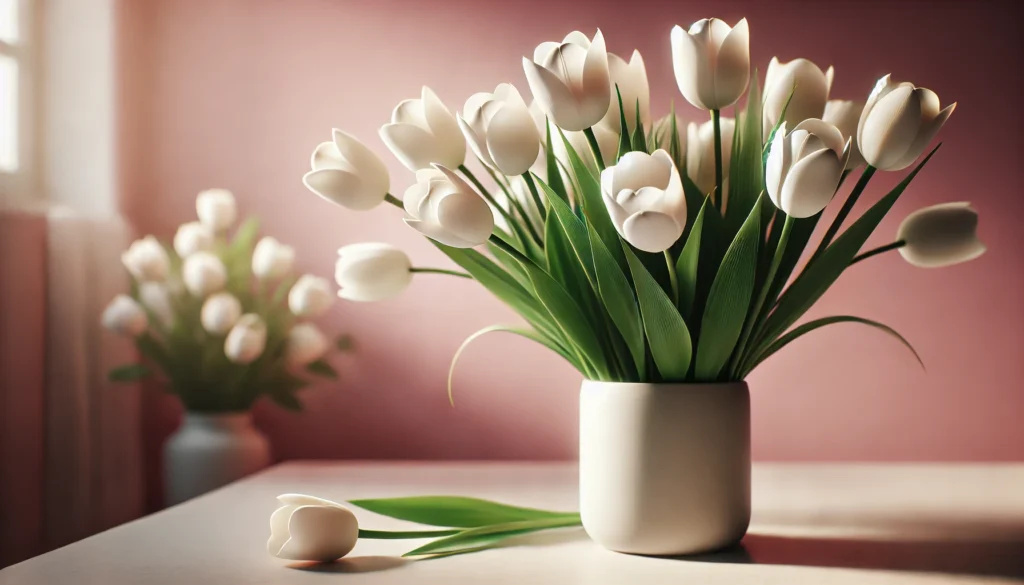
White tulips are relatively easy to care for, but proper maintenance ensures they stay healthy and vibrant throughout their growth cycle. Here are essential tips for nurturing white tulips:
Light Requirements and Placement Suggestions
White tulips thrive in locations with full to partial sunlight. Ideally, they need 6–8 hours of direct sunlight daily to promote healthy blooms. For indoor growth, place them near a sunny window where they can receive ample light. If planting outdoors, choose well-drained soil with access to morning sunlight and protection from harsh afternoon heat.
Pest and Disease Prevention Techniques
White tulips are susceptible to certain pests and diseases, but proactive measures can keep them safe:
- Pests: Watch for aphids, slugs, and bulb mites. Use natural remedies like neem oil or insecticidal soap to deter these pests.
- Fungal Diseases: Ensure proper soil drainage to prevent root rot and fungal infections like gray mold. Avoid overhead watering to keep foliage dry.
- Rodents: Protect bulbs from squirrels and rodents by covering planting areas with wire mesh.
Pruning and Post-Bloom Care for Healthy Regrowth
After blooming, white tulips need careful handling to ensure healthy regrowth:
- Deadheading: Remove faded blooms to prevent energy loss caused by seed production.
- Foliage Care: Allow leaves to die back naturally before trimming. This process enables the bulbs to store energy for the next growing season.
- Storage Tips: If bulbs are lifted after blooming, clean and dry them before storing in a cool, dry place for replanting.
White Tulips in Home Décor and Gifting Ideas
White tulips bring elegance and sophistication to any setting, making them a versatile choice for home décor and gifting. Their soft, clean appearance complements modern, minimalist, and classic interior designs, creating an atmosphere of tranquility and beauty.
Creative Ways to Incorporate White Tulips in Interior Design
- Table Centerpieces: Place white tulips in glass vases or ceramic pots to create eye-catching table centerpieces for dining or coffee tables.
- Bedroom Accents: Arrange tulips in bedside vases for a refreshing and calming touch.
- Entryway Displays: Welcome guests with a bouquet of white tulips in decorative jars or tall vases at the entrance.
- Seasonal Themes: Combine white tulips with greenery and candles for festive décor during holidays or celebrations.
- Wall Shelves and Mantels: Add small arrangements of tulips to shelves or mantels for a subtle yet elegant look.
Using White Tulips in Bouquets and Floral Arrangements
White tulips are a favorite for floral arrangements due to their graceful appearance.
- Bridal Bouquets: White tulips symbolize purity and love, making them ideal for wedding bouquets.
- Mixed Flower Arrangements: Pair them with roses, lilies, or greenery for a vibrant yet balanced look.
- Minimalist Arrangements: A single stem in a slender vase can create a modern and refined aesthetic.
- Event Décor: Use tulips in table settings, centerpieces, or aisle decorations for weddings, parties, and formal gatherings.
Gift Ideas for Weddings, Anniversaries, and Special Occasions
White tulips are thoughtful and meaningful gifts suitable for various occasions.
- Weddings: Representing purity and new beginnings, white tulips are a perfect wedding gift in the form of bouquets or potted plants.
- Anniversaries: Express love and elegance with white tulips arranged in stylish vases or baskets.
- Sympathy and Condolences: Their calm and serene appearance makes white tulips a respectful choice for expressing sympathy.
- Birthdays and Celebrations: Delight loved ones with fresh tulips presented in decorative wrapping or gift boxes.
White tulips effortlessly enhance home aesthetics and leave a lasting impression when given as gifts. Their beauty and symbolism make them a timeless addition to any décor or celebration.
Growing White Tulips in Pots and Containers
Choosing the Right Pots and Containers
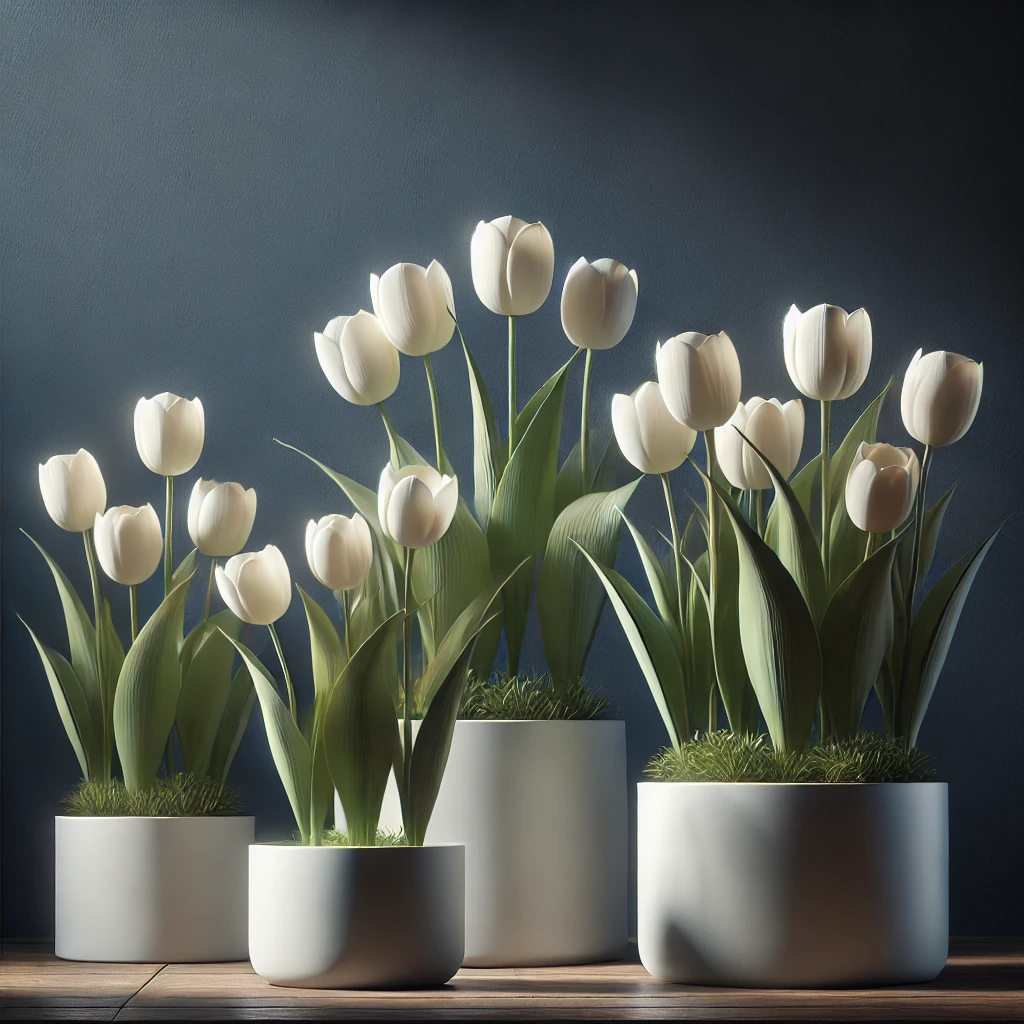
White tulips can thrive in pots and containers, making them ideal for small spaces like balconies, patios, and windowsills. Choose containers that are at least 10–12 inches deep to allow proper root growth. Ensure the pots have drainage holes to prevent waterlogging, which can damage the bulbs. Clay or ceramic pots are excellent options as they provide stability and improve aeration.
Indoor Growing Tips for Balconies and Patios
To grow white tulips indoors or in limited outdoor spaces, position the pots in areas that receive at least 6 hours of sunlight daily. Use well-draining soil mixed with compost or organic matter for nutrient-rich planting conditions. Water the bulbs moderately, ensuring the soil is moist but not soggy. Rotate the pots periodically to encourage even growth and prevent leaning stems.
Seasonal Care for Potted White Tulips
During the growing season, apply a balanced liquid fertilizer every 2–3 weeks to promote healthy blooms. Protect the pots from extreme weather by moving them indoors during heavy rains or frosts. After the blooming season, allow the foliage to die back naturally before trimming it. Store the bulbs in a cool, dry place if replanting is planned for the next season.
With proper care, potted white tulips can bloom beautifully year after year, adding elegance to compact spaces.
White Tulips for Events and Celebrations
White tulips are a symbol of purity, elegance, and new beginnings, making them a perfect choice for weddings and other celebrations. Their timeless beauty complements both modern and traditional themes, offering endless possibilities for floral arrangements and décor.
How to Style White Tulips for Weddings and Receptions
White tulips can be used in various ways to enhance wedding décor:
- Bridal Bouquets: Create stunning bridal bouquets by pairing white tulips with greenery or mixing them with pastel flowers for a soft, romantic look.
- Boutonnieres and Corsages: Use single white tulips accented with ribbons or pearls to design elegant boutonnieres for groomsmen and corsages for bridesmaids.
- Altar Arrangements: Arrange tall vases of white tulips at the altar to create a sophisticated focal point.
Ideas for Using White Tulips as Centerpieces or Decorative Accents
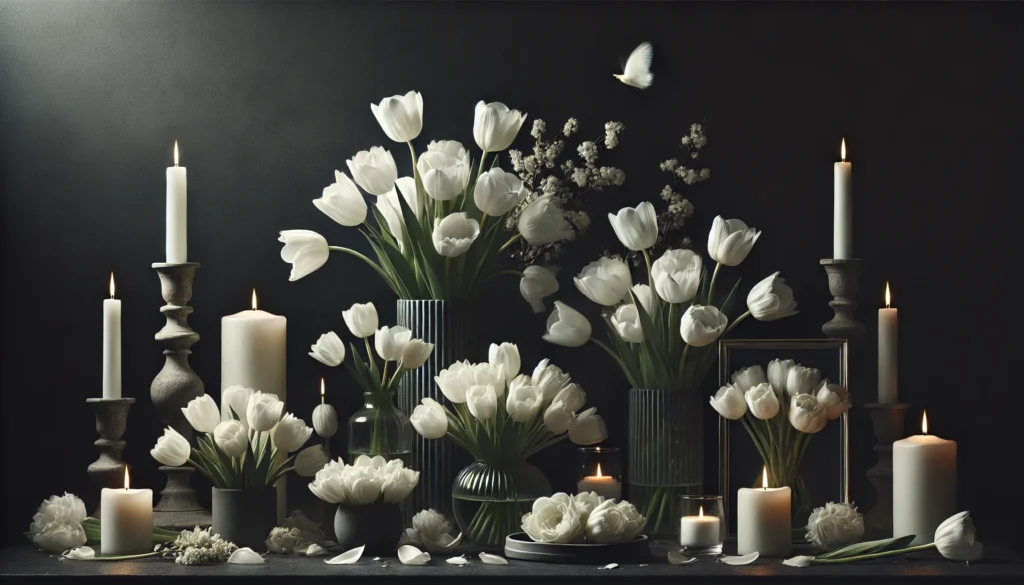
White tulips can add charm and elegance to any celebration setting:
- Table Centerpieces: Place white tulips in glass vases or rustic mason jars for chic table decorations. Combine them with candles or fairy lights to enhance their appeal.
- Aisle Decorations: Line the wedding aisle with white tulips in decorative pots or baskets to create a serene and romantic ambiance.
- Hanging Décor: Use suspended arrangements of white tulips in hanging baskets or floral hoops for a unique and dreamy effect.
White tulips offer endless creative opportunities, whether used as statement pieces or subtle accents. Their classic beauty makes them a favorite for weddings, receptions, and milestone celebrations.
Frequently Asked Questions (FAQs) About White Tulips
What do white tulips symbolize?
White tulips symbolize purity, innocence, and forgiveness. They are often associated with peace and elegance, making them ideal for weddings, sympathy bouquets, and special occasions that emphasize grace and sincerity.
How long do white tulips last?
White tulips typically last about 5–7 days after blooming when kept in a vase. In gardens, their blooms can last up to 1–2 weeks, depending on weather conditions and care. Proper watering and temperature control can help extend their lifespan.
Can white tulips grow indoors?
Yes, white tulips can grow indoors in pots or containers. They require well-drained soil, plenty of sunlight, and moderate watering to thrive. Indoor tulips also benefit from cooler temperatures, mimicking their natural outdoor environment.
Are white tulips easy to grow for beginners?
Yes, white tulips are beginner-friendly. They require minimal maintenance once planted, making them an excellent choice for novice gardeners. With proper planting in well-drained soil and sufficient sunlight, white tulips can bloom beautifully without extensive care.
What is the best season to plant white tulip bulbs?
The best time to plant white tulip bulbs is in the fall, about 6–8 weeks before the first frost. This allows the bulbs to establish roots before winter, leading to vibrant blooms in early to mid-spring.
What does a white tulip symbolize?
A white tulip symbolizes purity, forgiveness, and new beginnings. It is often used to express respect, remembrance, and peaceful intentions, making it a thoughtful flower for various emotional and celebratory events.
Is tulip expensive in India?
Tulips, including white tulips, are considered premium flowers in India. Their price can vary depending on availability, season, and demand. Imported tulips tend to be more expensive, while locally cultivated ones are relatively affordable.
Are white tulips romantic?
Yes, white tulips are often considered romantic due to their delicate and elegant appearance. They are frequently included in wedding bouquets and anniversary arrangements to symbolize eternal love, purity, and devotion.
Final Thoughts: Why White Tulips Are a Must-Have
White tulips are a timeless symbol of purity, elegance, and new beginnings. Their delicate petals and graceful appearance make them an ideal choice for gardens, floral arrangements, and home décor. Whether used to celebrate special occasions like weddings or to express sympathy and remembrance, white tulips add a touch of sophistication to any setting.
Beyond their beauty, white tulips are easy to grow and maintain, making them a favorite for both beginner and experienced gardeners. Their versatility extends from outdoor flower beds to indoor pots, allowing them to fit seamlessly into any space.
Adding white tulips to your garden or home décor not only enhances aesthetic appeal but also brings a sense of peace and tranquility. With proper care, these stunning flowers will continue to bloom year after year, offering beauty and elegance in every season.