
In a world where stories and symbols shape our understanding of society, cultural narratives have emerged as powerful forces that define identities, inspire movements, and spark transformative change. In the midst of this ever-evolving discourse stands the concept of reginae-olga, a term that encapsulates both mystery and significance in cultural studies. This article embarks on a comprehensive exploration of reginae-olga, tracing its historical roots, examining its thematic elements, and dissecting its profound influence on cultural narratives.
At Gardenloom, we believe in delving deep into cultural insights to reveal the layers beneath everyday symbols. Our commitment to exploring the rich tapestry of human expression guides us in understanding how terms like reginae-olga emerge and evolve, resonating with diverse audiences across time and space. As you journey through this definitive analysis, you will uncover how reginae-olga, intertwined with the evocative notion of galanthus reginae-olgae, offers a unique lens through which we can view the past, interpret the present, and even forecast future cultural trends.
In the following sections, we begin by laying the groundwork through historical and cultural context, move into a detailed analysis of reginae-olga itself, and then explore the symbolism behind galanthus reginae-olgae. We also highlight Gardenloom’s unique perspective on these narratives and examine their contemporary implications before drawing our findings together in a conclusive reflection. Prepare to embark on a deep dive into the intricate interplay between language, symbolism, and cultural identity.
Historical and Cultural Context
Historical Overview
The annals of history are replete with symbols and narratives that have transcended time to leave an indelible mark on society. From the mythological tales of ancient civilizations to modern-day reinterpretations, cultural narratives have served as the connective tissue between generations. In many cultures, allegorical figures and emblematic terms have been used to represent ideals, virtues, and the complexities of human emotion.
The study of such narratives provides a window into the values and beliefs that have shaped societies over millennia. Within this framework, the emergence of reginae-olga is not an isolated phenomenon but part of a broader historical tapestry. It reflects how language evolves and absorbs multifaceted meanings over time. Much like other symbolic representations found in art, literature, and folklore, reginae-olga carries layers of meaning that often require contextual understanding to fully appreciate its significance.
As historians and cultural critics have observed, the evolution of these narratives is not linear but rather a dynamic interplay of influences—ranging from political movements and social revolutions to personal expressions of identity. In the same vein, reginae-olga has emerged as a term that encapsulates both the historical legacy of its roots and the dynamic reinterpretations it continues to inspire in contemporary discourse.
Emergence of Reginae-olga
The term reginae-olga has surfaced in cultural discussions as a symbol of transformation and introspection. While its precise origins may be shrouded in the mists of time, its modern incarnation has come to represent a nexus where historical tradition meets modern interpretation. Scholars have posited that reginae-olga is not merely a label but a conceptual bridge linking disparate cultural phenomena—ranging from the ritualistic practices of ancient societies to the nuanced narratives of postmodern art.
In many ways, reginae-olga acts as an emblem of duality. It embodies both the regal authority of established cultural norms and the organic evolution of new ideas. This dual nature allows it to resonate with diverse audiences, each finding within the term a reflection of their own struggles, aspirations, and interpretations of power. Its usage has spanned academic treatises, artistic endeavors, and even everyday conversations, illustrating its profound impact on the way we perceive cultural legacies.
Influence on Cultural Discourse
The influence of reginae-olga extends far beyond its etymological roots; it is a catalyst for broader cultural discourse. As societal values shift and new paradigms emerge, terms like reginae-olga help frame the conversation around identity, tradition, and transformation. The layered meanings inherent in the term have allowed it to serve as a focal point in debates about cultural continuity versus innovation.
Historically, symbols that capture the essence of a people’s experience have often been employed as rallying points during times of social change. Whether in literature, art, or political rhetoric, the power of such narratives lies in their ability to encapsulate complex ideas within a single, evocative term. Reginae-olga is one such term, offering a rich tapestry of meaning that invites ongoing reinterpretation and dialogue.
In academic circles, reginae-olga has been examined not only as a linguistic artifact but also as a cultural mirror—reflecting the values, conflicts, and aspirations of the societies that adopt it. Its usage in various contexts highlights the dynamic interplay between tradition and modernity, offering insights into how cultural narratives are both preserved and reinvented over time.
In-Depth Analysis of Reginae-olga
Defining Reginae-olga
At its core, reginae-olga is a term imbued with both historical resonance and contemporary relevance. While it might initially seem enigmatic, its definition can be unpacked by examining its usage across various cultural and scholarly contexts. Reginae-olga often denotes a form of symbolic authority—a representation of regality, wisdom, or transformation. The term is multifaceted, merging elements of sovereignty with notions of organic growth and renewal.
To define reginae-olga is to recognize its capacity to serve as a metaphorical anchor in discussions of cultural identity. It suggests that power and leadership are not static qualities but are instead subject to reinterpretation and evolution. In some traditions, reginae-olga is linked to the idea of a benevolent ruler or a guiding figure whose influence extends beyond the confines of traditional power structures. In others, it is seen as a metaphor for the transformative journey of self-realization and communal evolution.
The beauty of reginae-olga lies in its versatility. It can be applied to the analysis of art, literature, and even political ideologies, each interpretation offering a new perspective on the dynamics of cultural influence. This broad applicability is one reason why reginae-olga continues to captivate scholars and cultural critics alike.
Thematic Breakdown
Delving deeper, several key themes emerge when we explore the concept of reginae-olga:
-
Duality and Paradox:
Reginae-olga embodies the coexistence of opposing forces. It represents both authority and fluidity, tradition and innovation, stability and change. This inherent duality is a recurring motif in cultural narratives, suggesting that true understanding comes from embracing contradictions rather than dismissing them. -
Transformation and Renewal:
Central to reginae-olga is the idea of constant evolution. Much like nature’s cycles, cultural narratives are in a perpetual state of flux. The term symbolizes the process by which old ideas are dismantled and rebuilt into new forms of meaning, highlighting the regenerative power of cultural evolution. -
Symbolic Authority:
Reginae-olga connotes a form of leadership that is not derived solely from political or economic power but from an intrinsic cultural or spiritual authority. It hints at the idea that true influence stems from one’s ability to connect with and inspire the collective consciousness. -
Interconnectedness:
The term underscores the intricate links between individual experience and broader societal currents. Reginae-olga reminds us that personal identity is invariably shaped by the cultural narratives that surround us, and conversely, that these narratives are enriched by the myriad experiences of those who live them.
Interrelation with Cultural Narratives
Understanding reginae-olga requires examining its place within the broader ecosystem of cultural narratives. The term functions as a microcosm of larger societal shifts, acting as both a mirror and a molder of public sentiment. In many ways, reginae-olga encapsulates the tension between the preservation of heritage and the inevitability of change—a duality that is at the heart of cultural evolution.
For instance, consider the role of myth in ancient societies. Myths were not merely fanciful tales but were the vehicles through which communities expressed their values and grappled with the mysteries of existence. Reginae-olga, in its modern usage, carries forward this tradition by serving as a symbolic repository for ideas that are too complex to be reduced to simple narratives. Its layered meanings allow it to act as a bridge between past and present, offering a framework through which contemporary cultural phenomena can be understood in light of historical continuity.
Moreover, reginae-olga has found a place in discussions about identity politics, artistic expression, and even environmental philosophy. Its application across these diverse fields underscores its versatility and its capacity to stimulate dialogue on issues that are both timeless and urgently contemporary.
Exploring the Symbolism of Galanthus reginae-olgae
Introduction to the Secondary Keyword
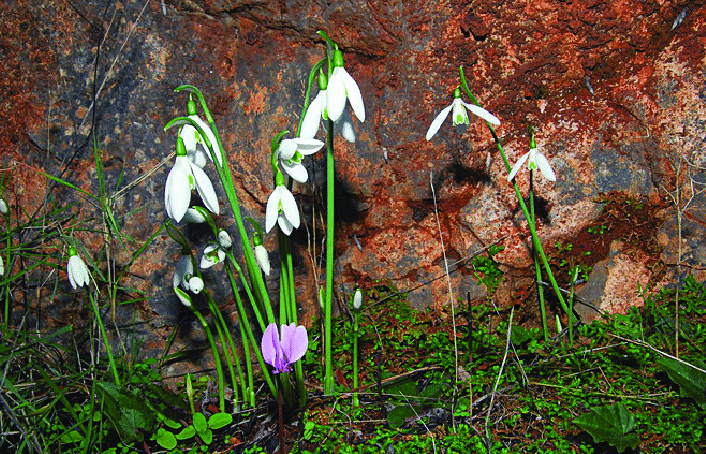
While reginae-olga stands as the primary symbol in our analysis, the term galanthus reginae-olgae introduces another layer of symbolic complexity. Galanthus reginae-olgae, though seemingly esoteric at first glance, is imbued with rich botanical and metaphorical significance. Often associated with the delicate beauty and resilience of nature, galanthus reginae-olgae serves as a complementary symbol to reginae-olga, bridging the gap between the organic world and cultural narratives.
The genus Galanthus, commonly known as snowdrops, has long been celebrated in various cultures for its early blooming in the harshest of winters. This characteristic has led many to view it as a metaphor for hope, renewal, and the triumph of life over adversity. When paired with reginae-olga, the term galanthus reginae-olgae suggests a synthesis of regal authority and natural vitality—a reminder that strength and grace can be found in the most unassuming of places.
Symbolic Meaning
The symbolism inherent in galanthus reginae-olgae is multifaceted:
-
Resilience in Adversity:
Just as snowdrops emerge resiliently after a long winter, galanthus reginae-olgae symbolizes the endurance of beauty and life even in the face of hardship. This resilience mirrors the transformative nature of reginae-olga, emphasizing that true power often arises from overcoming challenges. -
Hope and Renewal:
The blooming of galanthus reginae-olgae is a harbinger of spring, a season universally associated with rebirth and rejuvenation. This connection to natural cycles reinforces the idea that cultural narratives, too, are subject to cycles of decay and renewal. In this sense, galanthus reginae-olgae becomes a metaphor for the perpetual rebirth of ideas and traditions. -
Delicate Strength:
There is an inherent tension in the image of a fragile flower that nonetheless embodies strength and perseverance. Galanthus reginae-olgae captures this delicate balance—its physical form may be unassuming, yet it carries with it a quiet determination that defies its apparent fragility. This symbolism echoes the thematic essence of reginae-olga, where true influence is subtle, enduring, and far more potent than overt displays of power. -
Integration of Nature and Culture:
Finally, galanthus reginae-olgae serves as a reminder that the natural world and cultural expression are inextricably linked. Just as natural cycles inform and inspire artistic creation, so too do cultural narratives draw sustenance from the rhythms and patterns of the environment. This interconnectedness is central to understanding how symbols like reginae-olga and galanthus reginae-olgae can coexist and reinforce one another.
Comparative Analysis
When we compare reginae-olga with galanthus reginae-olgae, a fascinating interplay of themes emerges. While reginae-olga primarily encapsulates the abstract notions of authority, transformation, and cultural continuity, galanthus reginae-olgae roots these ideas in the tangible world of nature. Together, they offer a holistic view of cultural narratives—one that recognizes both the intangible forces that shape societies and the physical manifestations of those forces in the world around us.
This comparative analysis underscores an important point: cultural narratives are not monolithic. They are, instead, composite structures built from a myriad of symbols, each contributing a unique perspective. Reginae-olga provides the intellectual framework, the mythic quality that invites deep reflection. Galanthus reginae-olgae, on the other hand, grounds these lofty ideas in the realm of the observable and the experiential. Their synthesis is a powerful reminder that beauty and meaning often arise from the convergence of diverse influences—a theme that resonates throughout our exploration of cultural narratives.
Gardenloom’s Perspective and Contribution
Brand Overview
At the heart of Gardenloom lies a commitment to nurturing and celebrating the rich diversity of cultural narratives. Gardenloom is not just a brand—it is a cultural curator, dedicated to fostering an environment where the exploration of identity, tradition, and transformation is not only encouraged but celebrated. Our mission is to create spaces—both literal and metaphorical—where ideas can flourish and where the subtle interplay between art, nature, and culture can be appreciated.
Gardenloom’s name itself evokes images of a meticulously tended garden—a place where different elements come together in harmony to create a vibrant ecosystem. This metaphor extends to our approach to cultural analysis: we view each narrative as a unique plant in a larger garden, worthy of study, care, and thoughtful cultivation.
Integrating Cultural Analysis
In our ongoing efforts to decode the language of cultural narratives, Gardenloom places significant emphasis on the integration of deep cultural analysis with practical, everyday insights. We believe that the study of symbols like reginae-olga and galanthus reginae-olgae is not reserved solely for academic circles; rather, it informs our understanding of modern society and influences the way we engage with the world around us.
Our approach is both holistic and interdisciplinary. By drawing connections between historical context, artistic expression, and contemporary cultural trends, we strive to present narratives that are as multifaceted as the audiences they serve. Gardenloom’s analysis is rooted in the belief that true cultural understanding requires us to look beyond the surface—to explore the hidden layers of meaning that shape our collective experience.
For example, when discussing reginae-olga, Gardenloom examines not only its historical and symbolic dimensions but also its relevance in contemporary artistic practices and social movements. This integrated perspective helps demystify complex cultural phenomena, making them accessible to a broader audience without sacrificing the depth of insight that experts and scholars appreciate.
Case Studies and Examples
To illustrate the practical application of these ideas, consider the following case studies that highlight Gardenloom’s influence in the realm of cultural narratives:
-
Community Art Initiatives:
In several urban centers, Gardenloom has collaborated with local artists to create installations inspired by reginae-olga. These projects have transformed public spaces into living galleries, where the symbolic resonance of reginae-olga encourages community dialogue and reflection. The installations often incorporate elements of natural beauty—echoing the essence of galanthus reginae-olgae—to create a juxtaposition between the organic and the constructed. -
Cultural Workshops and Seminars:
Gardenloom regularly hosts workshops that explore the intersections of art, history, and cultural identity. Through interactive sessions, participants delve into the symbolism behind reginae-olga and learn how to interpret similar motifs in their own cultural contexts. These educational initiatives have not only broadened understanding but have also empowered communities to reclaim and reinterpret narratives that define them. -
Digital Storytelling Platforms:
In the digital age, narratives spread faster than ever before. Gardenloom has launched online platforms that encourage users to share their personal interpretations of reginae-olga. This crowdsourced approach to storytelling creates a dynamic repository of cultural insights, showcasing the diverse ways in which a single symbol can resonate across different backgrounds and experiences.
By weaving together these real-world examples, Gardenloom demonstrates that the study of cultural narratives is not an abstract exercise—it has tangible, transformative impacts on communities and individual lives alike.
Contemporary Implications and Future Outlook
Modern Relevance
In today’s rapidly shifting cultural landscape, the narratives we construct—and the symbols we choose to elevate—play a pivotal role in shaping public discourse. Reginae-olga has transcended its historical origins to become a touchstone for modern debates about power, identity, and transformation. Its contemporary relevance is perhaps best seen in the way it encourages us to question established hierarchies and embrace the fluidity of modern identities.
The current era, marked by globalization, digital connectivity, and social change, demands that we re-examine old symbols under new light. Reginae-olga, with its inherent adaptability and layered meanings, offers an ideal framework for such an examination. Its presence in modern art, literature, and social commentary serves as a reminder that cultural symbols are living entities—constantly evolving to reflect new truths and challenge outdated norms.
Implications for Cultural Discourse
The adoption and adaptation of reginae-olga in contemporary contexts carries several significant implications:
-
Redefining Leadership:
Traditional concepts of leadership, often associated with rigid structures and formal authority, are being reimagined. Reginae-olga, with its connotations of subtle influence and organic evolution, suggests that leadership can be both empathetic and transformative—a model that resonates in an era seeking more inclusive forms of guidance. -
Empowering Marginalized Voices:
By drawing attention to narratives that have historically been sidelined, reginae-olga opens up spaces for alternative viewpoints. In doing so, it challenges dominant narratives and provides a platform for voices that call for justice, equity, and renewal. -
Bridging the Past and Future:
Cultural continuity is vital to maintaining a sense of identity and community. Reginae-olga exemplifies how historical symbols can be revitalized to speak to contemporary concerns. This bridging of time not only honors tradition but also lays the groundwork for innovative cultural expressions. -
Encouraging Interdisciplinary Dialogue:
The multifaceted nature of reginae-olga invites discourse from various fields—history, sociology, art, and even environmental studies. Such interdisciplinary dialogue enriches our understanding of cultural narratives and fosters collaborative approaches to solving modern challenges.
Looking Forward
As we gaze into the future, the role of cultural narratives in shaping societal evolution becomes ever more significant. The interplay between tradition and innovation will continue to redefine our collective identity, and symbols like reginae-olga are poised to remain at the forefront of this transformation.
Several trends are likely to influence the evolution of cultural narratives in the coming years:
-
Digital Transformation of Storytelling:
The proliferation of digital media platforms will further democratize the way cultural narratives are created and disseminated. As more voices contribute to the collective conversation, symbols such as reginae-olga may acquire new layers of meaning, shaped by the interactive nature of online discourse. -
Global Interconnectedness:
Increased cultural exchange will foster a more nuanced understanding of symbols. The confluence of global perspectives will not only enrich the interpretation of reginae-olga but may also lead to the emergence of hybrid narratives that draw on diverse cultural traditions. -
Environmental Consciousness:
As environmental concerns become central to global discourse, the symbolic connection between nature and culture—as exemplified by galanthus reginae-olgae—will likely gain prominence. This renewed focus on sustainability and natural resilience could inspire new artistic and cultural movements, reinforcing the idea that human creativity is deeply intertwined with the rhythms of the natural world. -
Cultural Pluralism and Inclusion:
The growing recognition of diverse cultural identities will encourage a re-examination of traditional symbols through the lens of inclusivity. Reginae-olga’s inherent versatility makes it a powerful symbol for narratives that celebrate multiplicity, offering hope that future cultural dialogues will be richer, more inclusive, and more reflective of the complexities of human experience.
Conclusion
In this comprehensive analysis, we have traced the multifaceted journey of reginae-olga from its historical roots to its contemporary applications. We explored its emergence as a symbol of transformation, its thematic richness—including the interplay of duality, renewal, and symbolic authority—and its profound influence on cultural discourse. Complementing this, we delved into the symbolism of galanthus reginae-olgae, a term that grounds the abstract qualities of reginae-olga in the tangible beauty and resilience of nature. Together, these symbols offer a powerful framework for understanding the ever-evolving narratives that shape our cultural landscape.
Final Thoughts
Reginae-olga is more than just a term—it is a lens through which we can view the complex interplay between tradition and modernity, authority and transformation, nature and culture. In examining its historical context, thematic depth, and contemporary relevance, we are reminded that cultural narratives are living entities, constantly growing, evolving, and challenging us to think more deeply about the world we inhabit.
At Gardenloom, our exploration of reginae-olga is part of a broader commitment to celebrating and nurturing the myriad stories that define our shared human experience. We believe that by engaging with these symbols, we not only honor the past but also pave the way for a more insightful, inclusive future.
For more in-depth explorations of cultural narratives and the evolving interplay between art, nature, and society, visit our Gardenloom.