
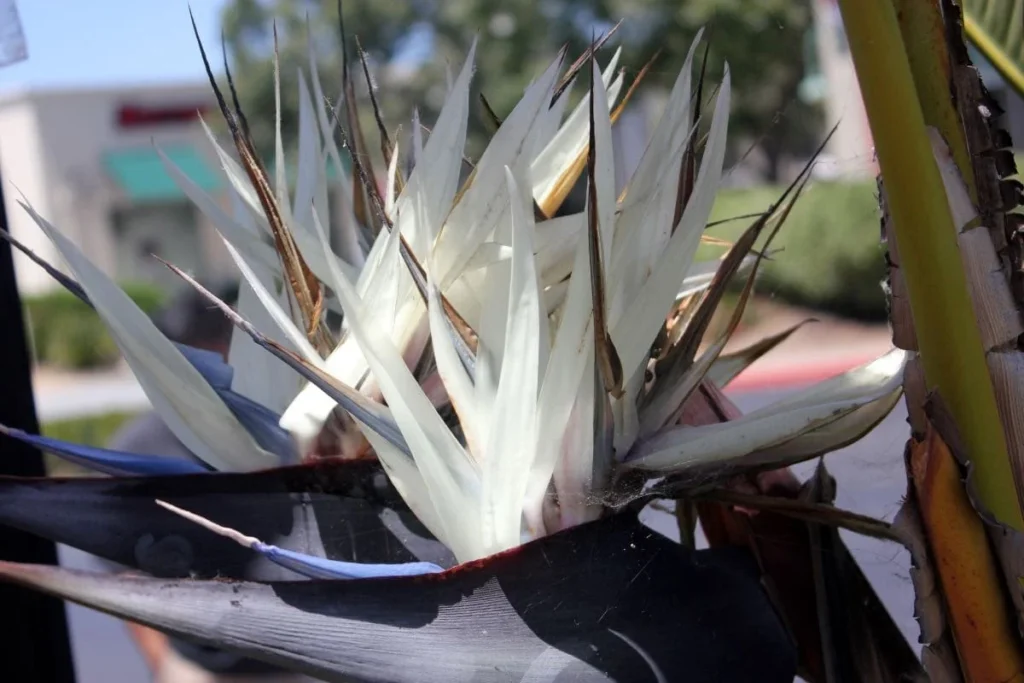
The White Bird of Paradise (Strelitzia nicolai) is an eye-catching plant known for its large, banana-like leaves and stunning, bird-shaped white flowers. Originating from South Africa, this plant adds a touch of elegance and tropical beauty to your indoor or outdoor space. Here is your ultimate guide on how to care for White Bird of Paradise, ensuring it thrives and enhances your home.
About White Bird of Paradise
The White Bird of Paradise is a striking plant that features large, leathery leaves and a unique flowering structure. It’s a popular choice for those seeking an exotic, low-maintenance plant. Although it’s often called the “Giant White Bird of Paradise,” it’s important to note that its flower is white, unlike the more commonly known orange and blue Bird of Paradise (Strelitzia reginae).
Other Common Names
- Giant White Bird of Paradise
- Wild Banana
- Blue-and-White Strelitzia
How Often Should I Water My White Bird of Paradise?
Watering your White Bird of Paradise properly is key to its growth. It’s essential to let the top inch of the soil dry out before watering, ensuring you avoid overwatering. The plant prefers a deep watering every week, but you should adjust watering frequency based on the season and environmental conditions.
- Watering Frequency: Water when the top inch of soil feels dry to the touch.
- Seasonal Adjustments: During the winter months, you can reduce watering to prevent overwatering and root rot.
- Watering Technique: Water thoroughly until water drains from the bottom of the pot. Ensure the plant isn’t left sitting in water to avoid root damage.
White Bird of Paradise Light Requirements
White Bird of Paradise thrives in bright, indirect light but can adapt to a range of light conditions. Ideally, you want to place it near a south-facing window where it can receive plenty of natural light. However, avoid intense midday sunlight, as it can scorch the plant’s leaves.
- Ideal Lighting: Bright, indirect light.
- Placement Tips: Place near south-facing windows for optimal light exposure, but avoid direct sun to prevent sunburn.
White Bird of Paradise Plant Care
Proper care ensures that your White Bird of Paradise flourishes, producing large, lush leaves and potentially even stunning flowers after several years.
- Leaf Maintenance: Dust the large leaves regularly using a damp cloth to remove any dust that may block sunlight. Rotate the plant every month to promote even growth.
- Pruning: Remove dead or yellowing leaves as needed to promote healthy growth and keep the plant looking tidy.
- Soil: Use well-draining, peat-free houseplant compost to provide the right environment for root development.
- Repotting: Repot the plant when it outgrows its pot, typically every 1–2 years. Look for roots emerging from the top of the soil as a sign that it’s time to repot.
How Big Do White Bird of Paradise Plants Grow?
In optimal conditions, White Bird of Paradise plants can become quite large. When grown indoors, they can reach heights of up to 5 feet, though outdoor specimens in tropical climates can grow much taller, reaching up to 20 feet in height and 6 feet in width.
- Indoor Growth: Typically 3–5 feet in height and 3 feet wide.
- Outdoor Growth: Can grow over 20 feet tall and spread out up to 6 feet in width.
Temperature & Humidity
White Bird of Paradise plants are relatively hardy but prefer warm, humid environments. This makes them ideal for indoor spaces where they can receive consistent warmth and moisture.
- Temperature Range: They thrive in temperatures between 60°F and 80°F (16°C and 27°C). Keep them away from drafts, and avoid temperatures below 29°F (-2°C).
- Humidity: White Bird of Paradise prefers high humidity levels. If the air in your home is dry, use a humidifier or place a water tray near the plant to maintain adequate moisture.
Are White Bird of Paradise Toxic for Pets & Kids?
White Bird of Paradise is mildly toxic to pets and young children if ingested. Symptoms of poisoning can include dizziness, vomiting, and mild gastrointestinal distress.
- Toxicity: Mildly toxic if ingested, affecting both humans and pets.
- Precaution: Keep the plant out of reach of children and pets to prevent accidental ingestion.
Troubleshooting Common Problems with White Bird of Paradise
Like any plant, White Bird of Paradise can experience a few issues. Knowing how to troubleshoot can help you maintain a healthy and thriving plant.
- Yellowing Leaves: Overwatering, underwatering, or insufficient light may cause yellowing leaves. Ensure proper watering practices and sufficient light exposure.
- Brown Leaf Edges: Brown edges are often a sign of low humidity or underwatering. Increase humidity or adjust watering habits.
- Pests: Keep an eye out for common pests like spider mites and aphids. If detected, treat the plant with insecticidal soap or neem oil.
Frequently Asked Questions about White Bird of Paradise Plant
Q: How can I encourage my White Bird of Paradise to flower?
A: White Bird of Paradise typically begins to flower when it’s at least 10 years old. To encourage flowering, ensure the plant is in optimal growing conditions—plenty of sunlight, proper watering, and humidity. Keep in mind that it can take several years to flower, especially indoors.
Q: Why are the leaves curling?
A: Curling leaves can be a sign of underwatering, low humidity, or pest infestations. Check the soil moisture, increase humidity, and inspect the plant for pests like spider mites.